L’excellence n’est pas un acte, mais une habitude.
C’est pourquoi je dis à vous tous, Ānanda : "Maintenez cette bonne pratique que j’ai fondée. Ne soyez pas mon dernier homme."
- Le plus grand ennemi de l’homme est son ego. La plus grande perte est de se perdre soi-même.
- L’arrogance est la pire défaite. L’auto-dénigrement est la chose la plus pitoyable.
- La compassion et la conscience de l’impermanence qui naissent dans l’esprit sont les plus grands dons.
Donc Ānanda, après ma mort, que l’enseignement soit votre île, vivez comme votre propre île, votre propre refuge, sans autre refuge.
Pour l’indépendant, il n’y a pas d’agitation. Quand il n’y a pas d’agitation, il y a tranquillité. Quand il y a tranquillité, il n’y a pas d’inclination. Quand il n’y a pas d’inclination, il n’y a pas de va-et-vient. Quand il n’y a pas de va-et-vient, il n’y a ni mort ni renaissance. Quand il n’y a ni mort ni renaissance, il n’y a ni ce monde, ni l’au-delà, ni entre les deux.
Ceci est la fin de la souffrance.
Récollection
Buddha - Enseignement - Saṅgha - Éthique - Générosité - Divinités
Compassion
Véritable liberté
Qui peut suivre les pas de Celui qui ne laisse aucune trace ? La tranquillité des actes - des paroles - des pensées est la présence d’un Bouddha. L’indéfinition de ceux-ci est l’extinction d’un Bouddha.
Sagesse
Laissez faire
Même les paroles les plus sages ne sont qu’un radeau pour nous aider à atteindre l’autre rive, et non pour s’y accrocher de manière permanente. Seul le Dhamma, qui est sans attachement, est véritablement le Dhamma.
Fortitude
Étudier avec les sages
Si l’on ne peut trouver de conseillers sages ou de compagnons bienveillants, il doit s’efforcer de vivre en endurant les dangers sans être ébranlé, en vagabondant seul, comme une corne de rhinocéros.
Discours
Chemin Ancien


Discipline - Analyses
Herbe
Virtue, responsibility, protection
Ethics (Sīla), Precepts (Sikkhāpada), Discipline (Pàtimokkha), Regulations (Khandhaka), Rules (Vinaya).
The initial disciples had mostly undergone training with various ascetics and non-Buddhist teachers for a long period, so non-negligence had become a natural part of their character. Therefore, the teacher Gotama only needed to guide them in Morality (Sīla), Concentration (Samādhi), and Wisdom (Paññā). The rules (Vinaya) only gradually appeared as the number of disciples increased rapidly later on... >>> Détails

Explanation and discussion of the Dhamma
- How can a drop of water not dry up?
- Drop it into the ocean.
Commentaries, annotations, and analyses of traditional scriptures, as well as the novels (sometimes also referred to as 'sūtras'), are the doctrinal points created by later disciples based on the original teachings of Master Gotama... >>> Détails

Non-Buddhist teaching of liberation
"These big fishes in this small pond are all covered by this net; even if they leap up, they are still confined and covered here."
Compilation of the differing and similar interpretations of various religions, their founders, teachers, philosophers, practitioners, and renowned speakers throughout history that humanity has preserved and recorded... >>> Détails

Other sources of materials
"Ipse se nihil scire id unum sciat."
Compilation of some websites, resources, libraries, and commonly used dictionaries for Buddhists and scholars of Buddhist studies... >>> Détails

Historical documents
"Do not seek to follow in the footsteps of the wise. Seek what they sought."
Milestones, events, causes, and the formation process of the schools and corresponding scriptures throughout the history of Buddhism. >>> Détails

Kafka on the Niraya's shore
The closer you get to the light, the greater your shadow grows. Until you become darkness yourself.
The interminable realm of darkness of Devadatta, Sisyphus, Prometheus. Here there is no Abhidhamma, only the entrance to the Avīci Hell. This place of delusional dreams is not a suitable abode for Buddhism practitioners. Depart from here before the last glimmer of light in Icarus’s eyes fades away... >>> Saṃsāra

Fortune
Bon Esprit Bon Jour
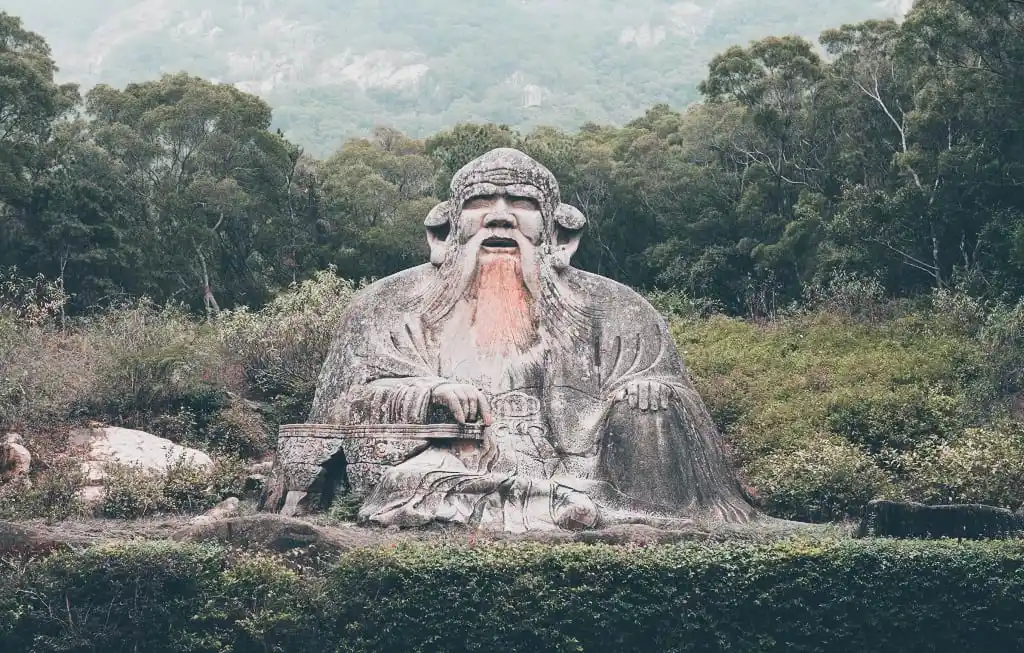
Lao tzu
#10
A good man does not think himself good, and a foolish man is always trying to appear good.
- The most humble person is not really humble.
- One cannot stand on one leg for long.
- One cannot walk with legs spread apart.
To know others is intelligence, to know oneself is wisdom. To conquer others is strength, to conquer oneself is true courage.

Mahākāla
#11
"Mahā" means great, surpassing. "Kāla" means time, darkness, emptiness. Mahākāla transcends time and space.
- An incarnation of Mahāvairocana Buddha embodies the quality of destruction.
- An aspect of Shiva dissolves everything back into the primal Void.
- Deep blackness represents the absence and complete dissolution of all phenomena.
Mahākāla, fierce and destructive, devastates all of nature and even deities; this represents the Age of Destruction and Emptiness, where time and space are almost beyond conception.
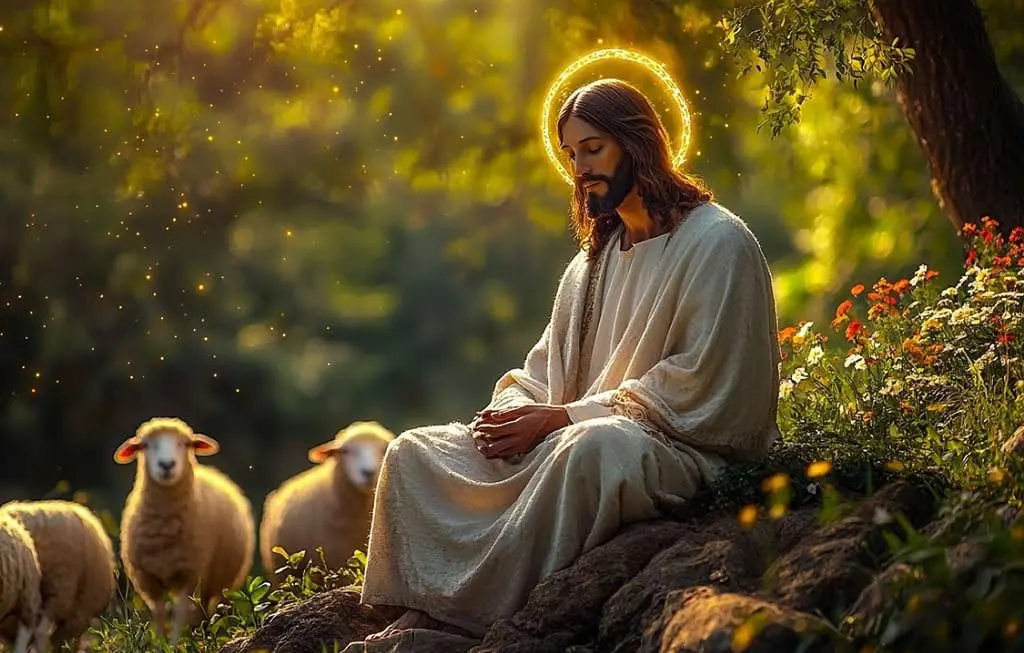
Yeshua
#12
Do not judge, or you too will be judged.
- You have heard that it was said: “Love your friends, hate your enemies.” But,
- now I tell you: love your enemies and pray for those who persecute you, so that you may become the children of your Father in heaven.
- For He makes his sun shine on bad and good people alike, and gives rain to those who do good and to those who do evil.
Do to others as you would have them do to you.
Bhaddekaratta
"Il ne faut pas négliger son propre bien pour celui des autres, aussi grand soit-il ;
Sachant bien ce qui est bon pour soi-même,
on doit être attentif à son véritable objectif."
- Dhammapada -
Dédicace
Pas de Venir Pas de Partir
Quels que soient les êtres rassemblés ici, sur le sol ou dans le ciel, puissent tous les êtres être de cœur heureux. Écoutez bien, tous vous êtres, ayez de l’amour pour toutes les créatures. Quels que soient les êtres rassemblés ici, puissiez-vous être en sécurité.

Ratanasutta
Sutta Nipāta
La foi justifiée est la meilleure richesse d’une personne. Celui qui est diligent et perspicace, l’enseignement lui apporte du bonheur lorsqu’il est bien pratiqué. La vérité est le goût le plus doux de tous. Celui que l’on dit avoir la meilleure vie vit selon la sagesse.
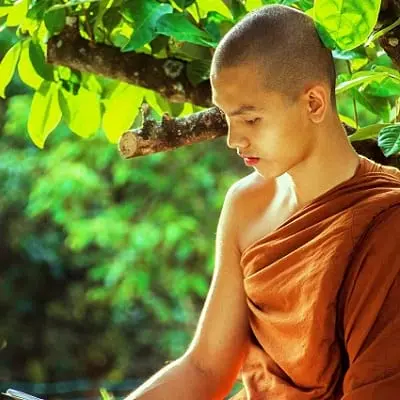
Āḷavakasutta
Sutta Nipāta
Comme une mère protégerait son enfant unique de sa vie, ainsi pour toutes les créatures, déployez un cœur sans bornes. Que ce soit debout, en marchant, assis ou couché, gardez cela toujours en tête ; car c’est une méditation divine dans cette vie.

Mettasutta
Sutta Nipāta
Tout est impermanent, et le Dukkha surgit de l’attachement. Lorsque l’esprit est sous contrôle, il suffit de le protéger des influences néfastes, sans chercher à se prémunir contre tout. Tout est non-soi, et le Nibbāna représente l’absence totale d’attachement.